
Blog
Why Your Website Isn’t Ranking: 10 Common SEO Mistakes to Avoid
June 24, 2026
Introduction
Are you using the best keywords, proper focus keyphrases, and the perfect meta description, but you’re still struggling to rank first on Google?
Your SEO efforts are getting wasted not because you aren’t trying hard enough but because you are making the same beginner mistakes that most businesses make without even realizing it.
They could be simple, from targeting the wrong keywords to posting thin content with no value, but the consequences can affect your website’s rankings.
In this blog, we will uncover common mistakes to avoid while working on your website’s SEO.
10 Common Mistakes Beginner Businesses Make and How To Fix Them
1. Focusing on Keywords Instead of Search Intent
One of the most common SEO mistakes businesses make is focusing entirely on keywords while ignoring what the user is actually looking for. You have to write for people’s needs, not for Google. If you are prioritizing content that does not match what the user is looking for, your visibility will be affected.
Search intent is the actual reason behind a user’s search. Understanding that intent helps you create content that answers their questions, solves their problems, or guides them toward a decision.
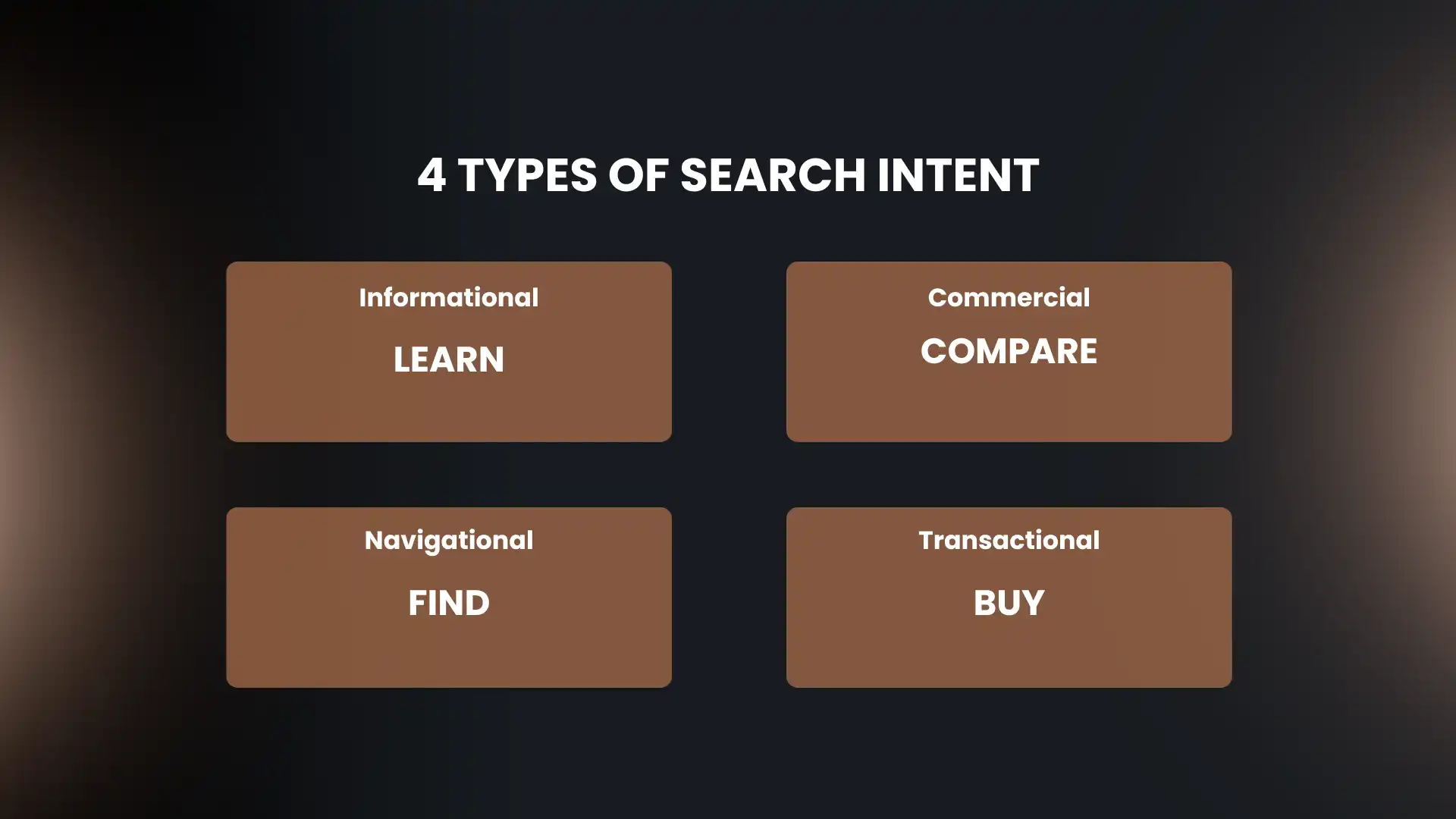
There are 4 types of search intent:
- Informational: When a user is searching to learn something, for example, how to do a certain task, and is seeking the steps.
- Navigational: When a user is looking for a shortcut to reach a specific website or webpage, rather than typing the exact URL into their browser’s address bar
- Commercial: When the user is searching for products or services before making a purchase.
- Transactional: When a user is buying a product or signing up for a service. They already know what they want and are searching to complete the transaction immediately.
How To Avoid it:
- Research properly on top-ranking pages before creating content on the topic.
- Use the proper kind of content for the needed problem.
- Instead of writing about what is popular, write about real problems that answer real questions.
For example, if you want to get traffic and want to write about Best SEO Company in Kerala, blogs are not the right page, but a sales page is. And if you are writing a blog, write genuinely and properly address the issue.
2. Treating SEO as a One-Time Task
When launching a new website, most businesses invest money and time into SEO in the beginning and assume the work is done. Then work on a few pages, publish some content, and wait for the results to show up naturally.
Unfortunately, SEO doesn’t work that way.
Search engines update their algorithms very often. You need to be up-to-date with these changes and put in a continuous effort to improve your SEO. A large amount of competing content is posted every day, the needs of customers change over time, and keywords that performed well a year ago may not be the most relevant ones today. If your website is the same version as it was in the beginning, without any changes, while everything around it advances, your rankings can slowly go down.
Think of SEO like maintaining a garden. Planting seeds is important, but without regular care, watering, and maintenance, growth eventually slows down. The same applies to your website.
For example, a blog published two years ago may contain outdated statistics, broken links, or information that is no longer relevant. Updating that content can help improve its rankings and attract new traffic without creating an entirely new article.
How to Avoid This Mistake
- Treat your website like an active business asset, not a project that ends after launch.
- Revisit older blogs from time to time and make sure the information is still accurate and useful.
- Pay attention to which pages are performing well and which ones may need improvement.
- Fix small issues as they appear, whether it’s a broken link, an outdated page, or slow-loading content.
- Keep publishing helpful content instead of relying only on what you’ve already posted.
- Remember that SEO keeps changing, so what worked a few years ago may not be enough today.
Businesses that view SEO as a long-term process are much more likely to see long-term growth than those that treat it as a one-time task.
3. Targeting the Wrong Keywords
Did you know that many businesses assume that targeting the most popular keywords will automatically bring more traffic to their website? While that sounds logical, it often creates the opposite problem.
Highly competitive keywords are usually dominated by large brands and websites that have been building their authority for years. Trying to rank for these broad terms can be difficult, especially if your website is fairly new.
Instead of trying to attract everyone who is on the internet, focus on attracting the right audience. A local keyword like “digital marketing agency in Calicut” may bring fewer visitors than a broad keyword like “digital marketing.” Still, those visitors are much more likely to become actual customers.
How to Avoid This Mistake
- Choose keywords that genuinely relate to your business and what you offer.
- Think about the words your customers would naturally type into Google.
- Be specific rather than trying to compete for broad, highly competitive terms.
- Focus on attracting the right viewers, not just getting more traffic.
- If you serve a particular city or region, include local keywords where they make sense.
4. Publishing Thin or Low-Quality Content
Not every blog post needs to be 3,000 words long. However, it must provide the proper information that the reader is looking for.
A common mistake businesses make is publishing content to fill their website with keywords. The result is often short, repetitive articles that don’t answer the user’s questions properly.
When someone visits your website, they expect useful information. If they leave without finding what they’re looking for, search engines notice that too.
How to Avoid This Mistake
- Ask yourself whether the content is genuinely useful to someone reading it.
- Try to answer the reader’s question completely, not just partially.
- Real examples can make your content more relatable and engaging.
- Avoid repeating the same information across different pages.
- Keep older content fresh by updating it when needed.
5. Ignoring Basic On-Page SEO
Think of on-page SEO as helping search engines understand your content better and spot you easily in a pool of thousands of other pages with the same content. With proper on-page seo, you have an upper hand in getting noticed by the search engine.
You may have written an excellent article, but if your headings are unclear, your meta description is missing, or your page structure is confusing, search engines may find it hard to understand what the page is about.
The good news is that these are often some of the easiest SEO issues to fix.
How to Avoid This Mistake
- Make it clear what each page is about from the very beginning.
- Organize your content with headings so visitors can scan through it easily.
- Write naturally and include keywords where they make sense.
- Avoid long or confusing URLs whenever possible.
- Don’t forget to add image descriptions to give search engines more context.
6. Providing a Poor Mobile Experience
Take a moment to think about how often you use your phone to browse websites. Your customers are doing the same.
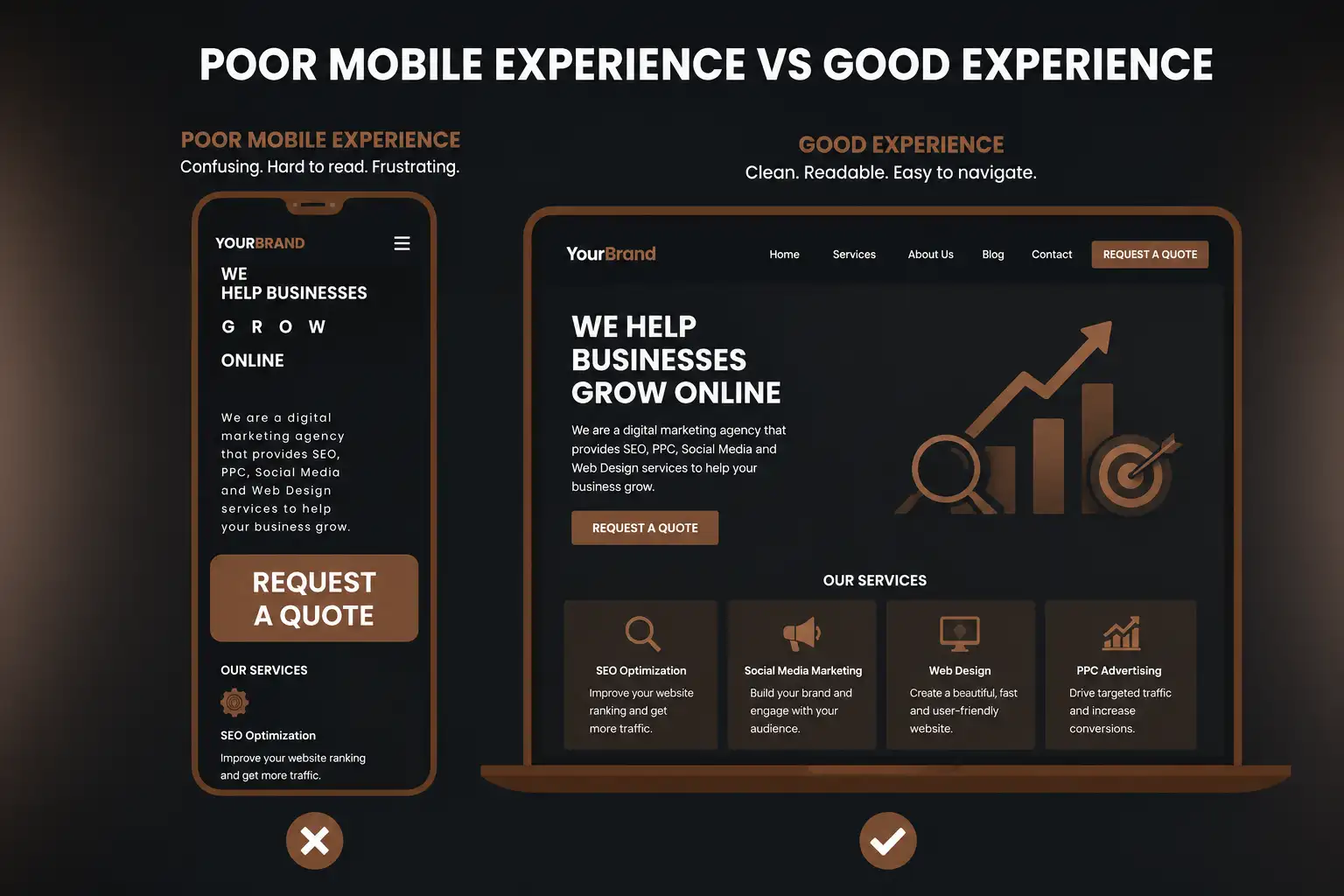
If your website is difficult to navigate on a mobile device, visitors may leave before they even learn about your products or services. Tiny text, broken layouts, and confusing menus can quickly frustrate users. They might not take the time to view the same website on a desktop, as the impression has already been made through their mobile experience.
A good website should look and function just as well on a phone as it does on a desktop.
No matter what platform, your goal is to keep the user engaged in the experience and convert them into potential customers.
How to Avoid This:
- Open your website on different phones and tablets to see how it actually looks.
- Make sure visitors can read your content without zooming in.
- Keep buttons large enough to tap comfortably.
- Organize menus so people can find what they need quickly.
- Improve mobile loading speed to keep visitors from leaving out of frustration.
7. Ignoring Website Speed
The truth is, most people don’t enjoy waiting for a slow website to load. In fact, many visitors leave within a few seconds if a page takes too long.
A slow website not only affects user experience but can also impact your search rankings. Even the best content can struggle to perform if visitors leave before it loads.
Think of website speed as your first impression. If it’s poor, many people won’t stick around long enough to see what you have to offer.
I have seen many people get frustrated with a slow website and leave before it even completes loading.
How to Fix This Mistake
- Large images can slow down your website, so it’s worth optimizing them before uploading.
- If there are plugins you don’t use anymore, consider removing them.
- A good hosting provider can make a big difference in website performance.
- Keep everything updated to avoid unnecessary issues.
- Check your website speed from time to time and fix problems before they affect your visitors.
8. Ignoring Image SEO
Images play a bigger role in SEO than many businesses realize.
Well-optimized images can improve user experience, help pages load faster, and even bring traffic through Google Images. On the other hand, large, unoptimized images can slow down your website significantly.
Image SEO isn’t complicated, but it is often overlooked.
If your website contains a large number of images, ignoring image optimization can gradually affect both your website speed and overall SEO performance. Thankfully, it is one of the easiest SEO improvements you can implement.
How to fix this:
- Resize and optimize images before uploading them to your website.
- Use clear file names instead of generic names like “IMG1234.”
- Add alt text so both search engines and users can understand what the image shows.
- Avoid uploading images that are much larger than they need to be.
- Try using WebP format whenever possible to reduce file size without sacrificing quality.
9. Poor Internal Linking Structure
Think of internal links as subways that connect different parts of your website.
When someone finishes reading a blog post, where should they go next? Internal links help answer that question. They guide visitors to relevant pages and help search engines understand how your content is connected.
Without internal links, valuable pages may remain hidden, and visitors may leave your website sooner than necessary.
How to Avoid This Mistake
- Help visitors discover related content by linking relevant pages together.
- Guide readers to useful blogs, services, or resources they might be interested in.
- Make it easy for people to find more information without having to search for it themselves.
- Use link text that clearly tells readers where the link will take them.
- Check your links occasionally to make sure they still work and lead to the right pages.
10. Ignoring Analytics and Performance Data
One of the biggest mistakes businesses make is never checking how their website is actually performing.
Many websites have Google Analytics installed, but they rarely check the data. Without tracking results, it’s difficult to know which pages are working, which keywords are bringing traffic, and where improvements are needed.
Real data, not assumptions, should guide SEO.
How to Avoid This Mistake
- Take a look at which pages are bringing people to your website.
- See what content your visitors seem to enjoy the most.
- Pay attention to pages where people leave quickly.
- If something isn’t performing well, don’t be afraid to improve it.
- Use what you learn to create better content in the future.
Why SEO Mistakes Can Cost Your Business More Than You Think
Many businesses assume SEO mistakes only affect rankings. In reality, the impact goes much further.
Poor SEO can reduce website traffic, lower lead generation, increase advertising costs, and make it harder for potential customers to find your business online. Small issues that seem harmless today can gradually affect your visibility and growth over time.
The good news is that most SEO mistakes are fixable. By regularly reviewing your website, updating content, monitoring performance, and focusing on user experience, you can gradually improve your search presence and attract more visitors.
Remember, SEO is not about tricking search engines. It’s about creating a better experience for the people using them.
Final Thoughts
SEO success doesn’t come from a single keyword, a plugin, or a one-time optimization session. It comes from consistently improving your website and creating content that genuinely helps the audience.
The mistakes discussed in this guide are common, especially among businesses that are just beginning their SEO journey. The good news is that once you identify these issues, they can often be corrected with the right strategy and continuous effort.
Whether you’re creating new content, optimizing existing pages, or improving your website’s performance, always focus on providing value to your users first. Search engines are constantly evolving, but one thing remains the same: websites that help people tend to perform better over time.