
Blog
How Google Search Rankings Work: A Beginner’s Guide
August 9, 2026
Introduction
Have you ever searched for something on Google and wondered why one website appears at the top while another website is sitting somewhere on page five?
Maybe you search for "best digital marketing agency in Kerala", and Google immediately shows you a list of websites. You might click the first one, look at a few more results, and never even reach page two.
But how does Google decide which website deserves that first position?
It is not as simple as choosing the website that has the most keywords. Google has automated systems that look at many different signals to understand what a page is about, how relevant it is to a search, and whether it is likely to be useful to the person searching.
If you have a business website and want people to find it through Google, understanding this process can make SEO feel much less confusing.
So, let us break it down.
What Actually Happens When You Search on Google?
When you type something into Google, there is a lot happening behind that simple search box.
Google has already discovered and stored information about huge numbers of web pages. When you make a search, its systems look through this information and try to return pages that are relevant and useful for your particular query.
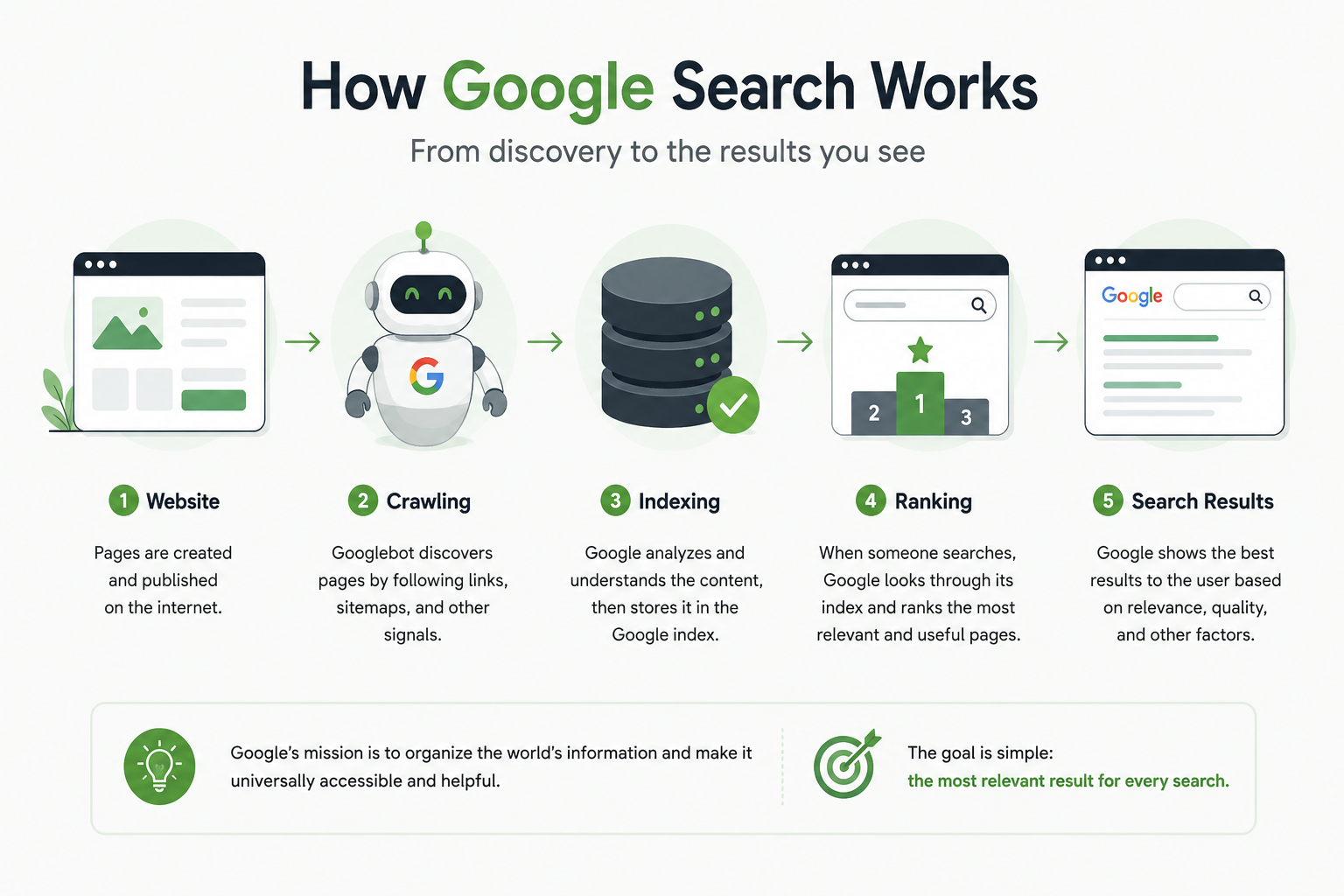
Google broadly explains Search in three stages:
Crawling → Indexing → Serving Search Results
Think of it like this:
First: Google needs to find your website.
Then: Google needs to understand and store information about it.
Finally: When someone searches for something related, Google decides whether your page should appear and where it should appear.
Let's look at each stage.
1. Crawling: Google Finds Your Website
Before Google can rank a page, it needs to know that the page exists.
This is where crawling comes in.
Google uses automated programs called crawlers, commonly known as Googlebot, to discover pages across the internet. Google can discover pages through links from other pages, sitemaps, and previously known URLs.
For example, imagine you publish a new page called:
yourwebsite.com/web-design-services
Google may discover that page through your sitemap or through a link from another page on your website.
Googlebot then visits the page and reads the available content.
This is one reason internal linking matters. When your important pages are properly connected to other pages on your website, it can make it easier for search engines to discover them.
2. Indexing: Google Understands Your Page
Finding your page is only the beginning.
Google then needs to understand what the page is about. This process is called indexing.
During indexing, Google analyzes things such as the text on the page, images, videos, title elements, and other information. It can then store information about the page in Google's index.
Think of the index as a huge library.
Your website is one of the many books.
Google needs to understand what your book is about so it knows when it might be useful to someone looking for that information.
This is where things such as clear headings, useful content, descriptive page titles, relevant keywords, and properly organized pages become important.
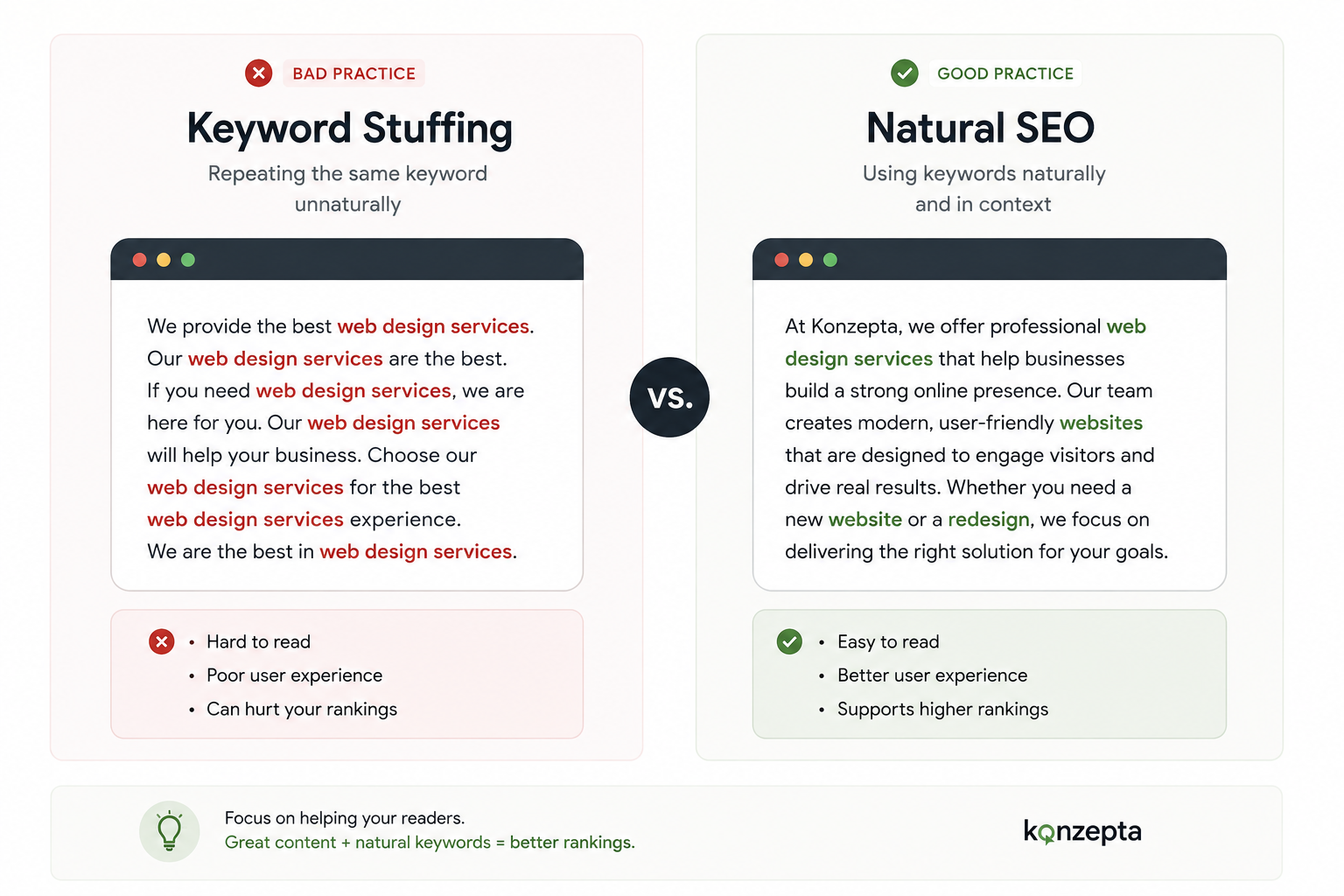
That does not mean you should fill your page with the same keyword again and again.
Google's own guidance recommends creating helpful, reliable, people-first content rather than content written mainly to manipulate rankings.
3. Ranking: Google Chooses What to Show
Now comes the part most business owners are interested in.
How does Google decide which page appears first?
When someone enters a search query, Google's systems look through its index and return pages that it believes are relevant and useful for that particular search.
Google says that relevance is determined using hundreds of factors, and these can include things such as the user's location, language, and device.
So there is no single magic button that says:
"This website should rank number one."
Instead, many different signals and systems work together.
This is also why SEO is not something you can usually fix with one change.
What Factors Affect Google Search Rankings?
Here is where SEO can start sounding complicated.
You will hear people talk about hundreds of ranking signals, algorithm updates, backlinks, keywords, technical SEO, Core Web Vitals, content quality, and many other things.
You do not need to understand every technical detail to get started.
Instead, focus on the main areas that help Google understand and evaluate your website.
Relevant and Helpful Content
Imagine someone searches:
"How to choose a website development company?"
They click on your page and find a short paragraph that barely answers the question. Then they click back and search again.
That is not a great experience.
Your content should actually help the person who searched.
Google's current guidance emphasizes helpful, reliable, people-first content. It also encourages creators to provide original information, useful analysis, and enough detail to satisfy the reader's goal.
This is why keyword research is useful.
Our guide to keyword research can help you understand what your audience is searching for before you start creating content.
But remember, the goal is not simply to include a keyword.
The goal is to answer the question behind the keyword.
Search Intent
This is another important part of SEO.
Search intent simply means what the person is actually trying to find when they search.
For example:
"What is SEO?"
The person probably wants an explanation.
"Best SEO agency in Kerala"
The person may be comparing service providers.
"SEO services near me"
The person may be ready to contact a business.
If your page does not match the reason behind the search, it may not be the best result for that query.
This is why writing a page around a keyword alone is not enough. You need to understand what the person expects to find after clicking.
Website Experience
Imagine finding exactly the information you need on Google, clicking the result, and then waiting five seconds for the website to load.
You probably would not be impressed.
Website experience matters because people need to be able to use your website easily.
Things such as:
- Mobile usability
- Page loading speed
- Clear navigation
- Readable content
- Secure browsing
- Good overall page experience
all contribute to how people experience your website.
Google has stated that its ranking systems consider page experience, although a good page experience does not automatically make a page rank first. Relevance and usefulness still matter.
You can also read our articles on mobile-first web design and why website speed matters for SEO and conversions for a deeper look at these areas.
Links and Website Structure
Links help both people and search engines move around your website.
For example, imagine you have a blog about website design. From that blog, you link to your website development service page.
A visitor can follow the link if they want to learn more about your service.
Search engines can also use links to discover pages. Google specifically notes that links can be one way its crawlers discover new URLs.
This is why internal linking is worth paying attention to.
You should connect related pages naturally rather than adding links simply for the sake of adding them.
Does Using Keywords Make a Website Rank Higher?
This is one of the biggest misunderstandings about SEO.
You might think:
"If I want to rank for website development in Kerala, I should use that exact phrase 50 times."
No.
That can actually make your content uncomfortable to read.
Keywords help Google understand what your page is about, but they are only one part of the bigger picture.
Google's Search Essentials recommends using words that people would use to look for your content and placing them in useful locations such as page titles, the main heading, alt text, and link text.
The important word here is naturally.
Write for the person first. Then make sure your important topic and terminology are clear enough for search engines to understand.
Why Does One Website Rank Above Another?
Let us say two businesses offer almost the same service.
Both have websites.
Both use relevant keywords.
So why does one appear on the first page while the other appears much lower?
There may be several reasons.
One website might have more useful content. It might better match the searcher's intent. It could have stronger links and a clearer website structure. It may provide a better overall experience.
Google's ranking systems work at the page level and use a variety of signals and systems to understand and rank individual pages.
This is why there is no reliable formula such as:
10 keywords + 5 backlinks + fast website = position #1.
SEO does not work that neatly.
Does Having a Good Website Guarantee a Top Google Ranking?
No.
This is important to understand before investing time and money into SEO.
A technically good website does not automatically become the number one result.
Google itself says that meeting its technical requirements and best practices does not guarantee that a page will be crawled, indexed, or served in search results.
Your website needs to be accessible and understandable, but it also needs to provide something useful and relevant to the searcher's query.
Think about it this way.
A beautiful restaurant with a clean kitchen does not automatically become the most popular restaurant in the city.
The food still matters.
In SEO, the usefulness of your content matters too.
What Can You Do to Improve Your Search Rankings?
You do not need to change everything on your website at once.
Start with the basics.
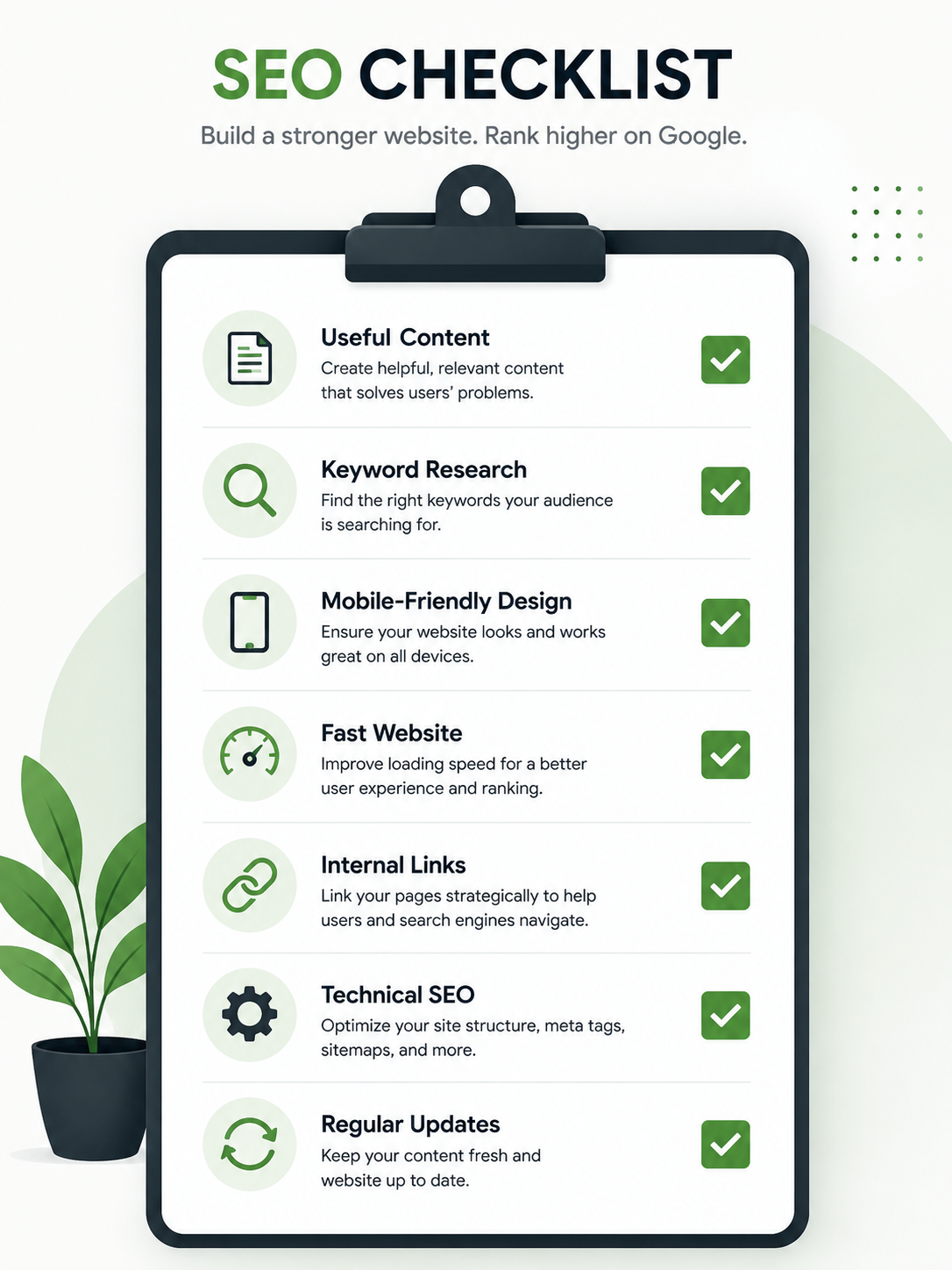
1. Create Useful Content
Write pages and articles that answer real questions your customers have.
Do not write a blog simply because you found a keyword with high search volume.
Ask yourself:
Would this actually help someone?
2. Use Relevant Keywords Naturally
Research what your audience searches for and use those terms where they make sense.
Your page title, main heading, subheadings, body content, image alt text, and links can all provide context.
But do not force keywords into places where they sound unnatural. Google recommends people-first content rather than content created mainly to manipulate rankings.
3. Make Your Website Easy to Use
Check your website on both desktop and mobile.
Try to complete an action as if you were a customer.
Can you find the service page?
Can you contact the business?
Can you find the information you need?
If something feels difficult, fix it.
Our blog on common website mistakes that cost businesses customers covers several of the problems that can affect the visitor experience.
4. Improve Your Technical SEO
Make sure search engines can access and understand your important pages.
This includes things such as:
- Crawlable pages
- Clear website structure
- Proper redirects
- Descriptive URLs
- Mobile-friendly pages
- Useful metadata
- An XML sitemap where appropriate
- Secure HTTPS
Google's documentation explains that crawling and indexing can be affected by issues such as server problems, robots.txt rules, inaccessible pages, and indexing controls.
5. Keep Improving
SEO is not a one-time task.
Search results change. Websites change. Your competitors publish new content. Google continues to improve its ranking systems.
Google regularly updates its ranking systems, including broad core updates, as it works to improve the quality and usefulness of Search.
That means your SEO strategy should not be:
"We optimized the website once, so we are done."
It should be an ongoing process of checking, learning, improving, and creating useful content.
How Long Does It Take to Rank on Google?
This is probably the question every business owner wants to ask next.
"If I do all of this today, when will I reach number one?"
Unfortunately, there is no fixed answer.
Google does not guarantee that a page will be crawled, indexed, or appear in a particular position. Search rankings depend on many factors, including the query, competition, relevance, content quality, and Google's ongoing ranking systems.
A new website competing for a highly competitive keyword will usually have a very different journey from an established website targeting a smaller, more specific search.
So instead of asking only:
"How quickly can I rank?"
ask:
"How can I build a website that deserves to rank?"
That change in mindset is much more useful.
Final Thoughts
Google Search can seem mysterious when you only see the final results page.
You type something. You get ten blue links, some ads, maps, images, videos, or other search features. It can feel like Google simply decides which websites it likes.
There is much more happening behind the scenes.
Google has to discover pages, crawl them, understand and index their content, and then use its ranking systems to find results that are relevant and useful for the person's search.
For a business owner, you do not need to understand every technical detail of Google's systems.
Start with the basics.
Create useful content. Understand what your customers are searching for. Make your website easy to use. Keep your important pages accessible. Use keywords naturally. And keep improving your website over time.
There is no secret formula that guarantees the first position.
Good SEO is about making it easier for both Google and your customers to understand why your website is useful.
And that is a much better place to start.